Mastering Wedge Fundamentals Around The Green
By the end of the article, you will understand and be able to apply the three main wedge techniques around the green—Chip and Run (1), Soft Landing (2), and Lob Shot (3). These techniques will help you select the best shot for various pin positions.


Objective:
By the end of the article, you will understand and be able to apply the three main wedge techniques around the green—Chip and Run (1), Soft Landing (2), and Lob Shot (3). These techniques will help you select the best shot for various pin positions.
1. Background
- The Chip and Run is a low-trajectory shot that rolls out towards a middle to back pin.
- Mid-trajectory shots with soft landings are used to attack a middle pin or a when the pin is on a lower shelf and you want a slower controlled roll as the ball approaches the downslope.
- High-trajectory shots, like fancy lob shots, are for tight near pins when you are short sided and need to clear patch of rough or a bunker before softly landing on the green.
*Unbogey learning tip - As you practice each technique, focus on mastering each technique completely before progressing to the next.
How to hit the controlled chip and run:
Key Points:
- Set up for a precise, low-trajectory chip by positioning the ball slightly back of center with a forward shaft lean and level shoulders.
- Use your larger core muscles to execute the swing with a flat lead wrist, minimal wrist hinge, and arms driving the club motion.
- Complete the chip motion by stopping the grip at the front hip, locking in a clean, decisive shot.
- Demonstration:
- Start with a 56° wedge, then progressively use lower-lofted clubs. Each club change increases roll-out by 5-10 yards as backspin decreases.
- Practice Drill:
- Hit 10 chip shots, aiming to bounce, check, and roll towards the target pin. Master the technique by landing 8 out of 10 balls within 6 feet of the target.
How to hit the soft landing strike for a middle pin.
- Key Points:
- Position the ball center to slightly forward in your stance on a clean lie, allowing the club's bounce to slide smoothly under the ball. This allows the ball to roll up the club face on impact giving it the needed backspin.
- Set up with a neutral shaft and light grip pressure, keeping hands slightly ahead at impact because this keep the club lofted while ensuring clean contact.
- Let the club swing freely through impact with a slightly cupped lead wrist, finishing parallel to your belt line for optimal spin control.
- Remember when practicing:
- Use a 56° wedge and emphasize letting the bounce of the club interact with the turf.
- Try a 60° wedge for comparison and focus on the bounce sliding through the turf. The 56 is a more reliable because the leading edge of the lower lofted club is less likely to catch leasing to fewer skulled shots across the green.
The Flop-and-Drop Lob Shot
- Key Points:
- The success of a flop shot begins with the setup. You need a clean lie with grass underneath the ball, which allows the club to glide smoothly. Position the ball forward in your stance and open the clubface to maximize loft – this creates more grooves for the ball to roll up as the club passes underneath.
- The shaft position is crucial: keep it neutral without any forward lean. This setup enables a large, gentle swing where the club can slide beneath the ball. As this happens, the ball rolls backward up the clubface before launching high into the air with significant backspin.
- Wrist action plays a vital role in this shot. You want to achieve maximum wrist hinge, with the lead wrist cupped during the follow-through. Think of the motion like sheathing a sword – the club should swing upward in a fluid motion. The wrists hinge both on the backswing and follow-through, creating a smooth, continuous movement that facilitates the perfect loft and spin needed for the shot.
This technique, when executed properly, results in a high, soft-landing shot with plenty of backspin – ideal for navigating challenging situations around the green.
- When Practicing:
- Use a 60° wedge, ensuring the ball lands softly and quickly stops.
- Open the face, widen your stance, and practice the "holster finish" where the club comes around the corner into a soft finish.
Prove It
Goal: Transfer skills to realistic scenarios.
- Simulated Challenge:
- Set up three distinct short-game challenges hitting 10 balls each.
- Challenge 1: Use the chip and run to a flat back pin with plenty of green.
- Challenge 2: Use the soft landing to a sloped green where the pin is in the middle.
- Challenge 3: Use flop shot to a pin with minimal green to work with.
- Set up three distinct short-game challenges hitting 10 balls each.
- Scoring System:
- Give yourself one point for every ball within 6 feet (about two putter lengths) of the pin. Try to score at least 80% mastery. (8/10 each & 24/30 total)
Reflection and Adjustments
Goal: Encourage self-reflection to enhance learning.
- On the drive back home, think about what worked well with each technique?
- Which technique felt most comfortable?
- Which technique felt most reliable?
Super Learning Bonus:
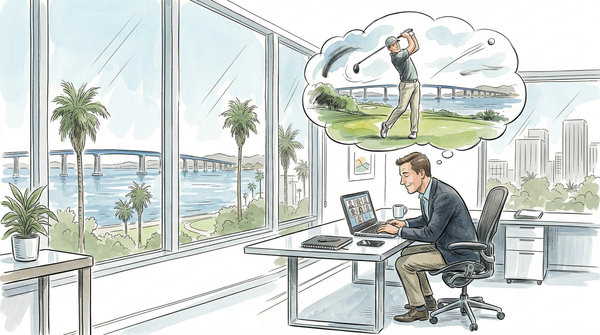
- Spend 10 minutes visualizing and reviewing each type of chip and the key points of each one. This type of mental rehearsal will help with recall and make it more likely that you will remember your technique next time you're on the course.